I got a bit too relaxed about organising my trip from Sucre to Uyuni, leaving everything to the last minute. Booking my bus ahead of time? Who needs to do that? Apparently, in southern Bolivia, you do. The overnight bus was fully booked and I wanted to start the tour of the salt flats the next day so I had to take the last seat on the 5pm bus instead. Which meant I would get to Uyuni at 1am and would have to pay for a hostel for the night which was annoying as I’ve been managing transport pretty efficiently so far. It was a 3-hour ride to Potosí where we had an hour’s wait before getting on the connecting bus to Uyuni. My assigned seat was occupied when I got on and as the bus filled up I started to worry that I’d have to spend the upcoming 4-hour ride in the aisle. But I shouldn’t have underestimated Bolivian buses. A family I’d chatted to on the Sucre-Potosí bus quickly caught on to what was happening and helped me communicate the issue to the driver and, shortly thereafter, a woman from the bus company showed up with her clipboard. Everything might be handwritten and paper-based on buses here but she had her diagram of the bus seats with all the passengers’ names written on each seat number and quickly informed me the actual number of the last seat that was vacant on the bus so I avoided spending half the night on the floor of a bus and off we went, bang on time, at 9pm.
Despite having a seat, it was not an excellent ride in the comfort-stakes. It was literally the least space I have ever had on a bus and it’s cold in southern Bolivia after dark so I was actually missing those hardcore airconditioned rides I’ve had elsewhere because I’m pretty sure they were less cold. Contrary to the stories about buses in Bolivia, we had no mechanical issues to cause delays so we arrived into Uyuni at the scheduled time. Damn. There is no bus station in Uyuni, just a street with the offices of bus agencies so we all got dropped off there on arrival. And then I had to find a hostel which turned out to be a big ask at that time of the night. I figured the Lonely Planet-recommended options were my safest bets so I went to a few of the ones listed in there, all of which had shut up shop by that point in the evening. Then I remembered that we had passed a hostel, where the lights were on, just before turning into the street where the bus dropped us off so I headed there. The guy who was running it was charging a bit more than I had hoped to pay (10 Bol. more which I know isn’t a lot but in Bolivia it’s lunch so here it is) but there were a lot of stray dogs on the dark streets of Uyuni and a few loud drunken men in some agitated discussions with one another and I didn’t feel like joining them out there in the cold for the night (it was 10 degrees according to the sign on the little pedestrianised plaza – I was wearing two jumpers and a jacket and was still cold so I was not impressed).
The next morning I went to the agency that I’d reserved a place on the salt flats tour with through my hostel in Sucre, paid the balance and met up with the rest of my group as we started loading our luggage onto the roof of our 4×4.
I did the standard 3d/2n tour, finishing back in Uyuni rather than transferring to San Pedro de Atacama in Chile (definitely the popular backpacker option). I saw what all tourists see, took the exact same photos but was no less impressed with the place than anyone else. It’s an amazing landscape, surreal almost, and the sheer vastness is the hardest part to capture in photos.
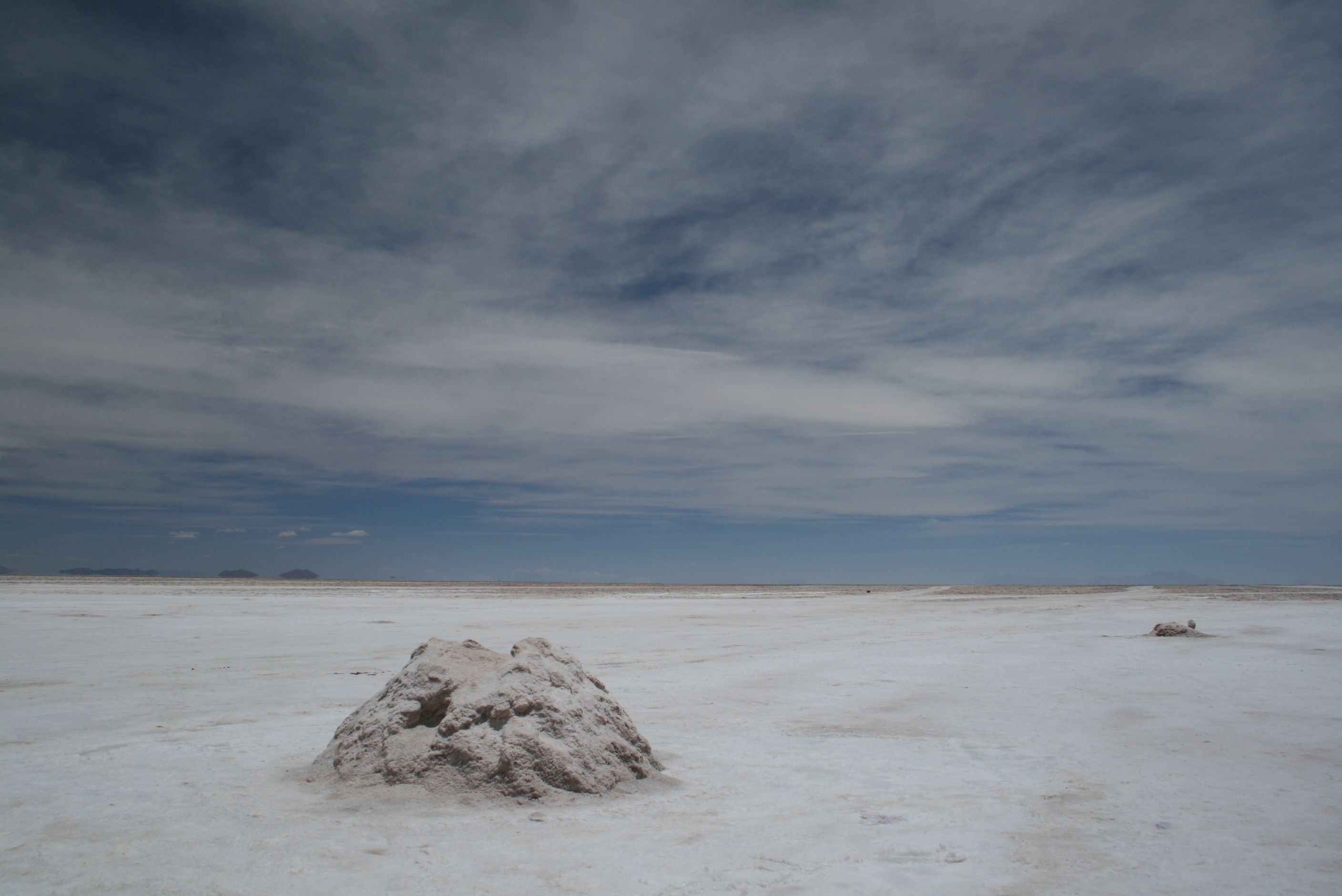
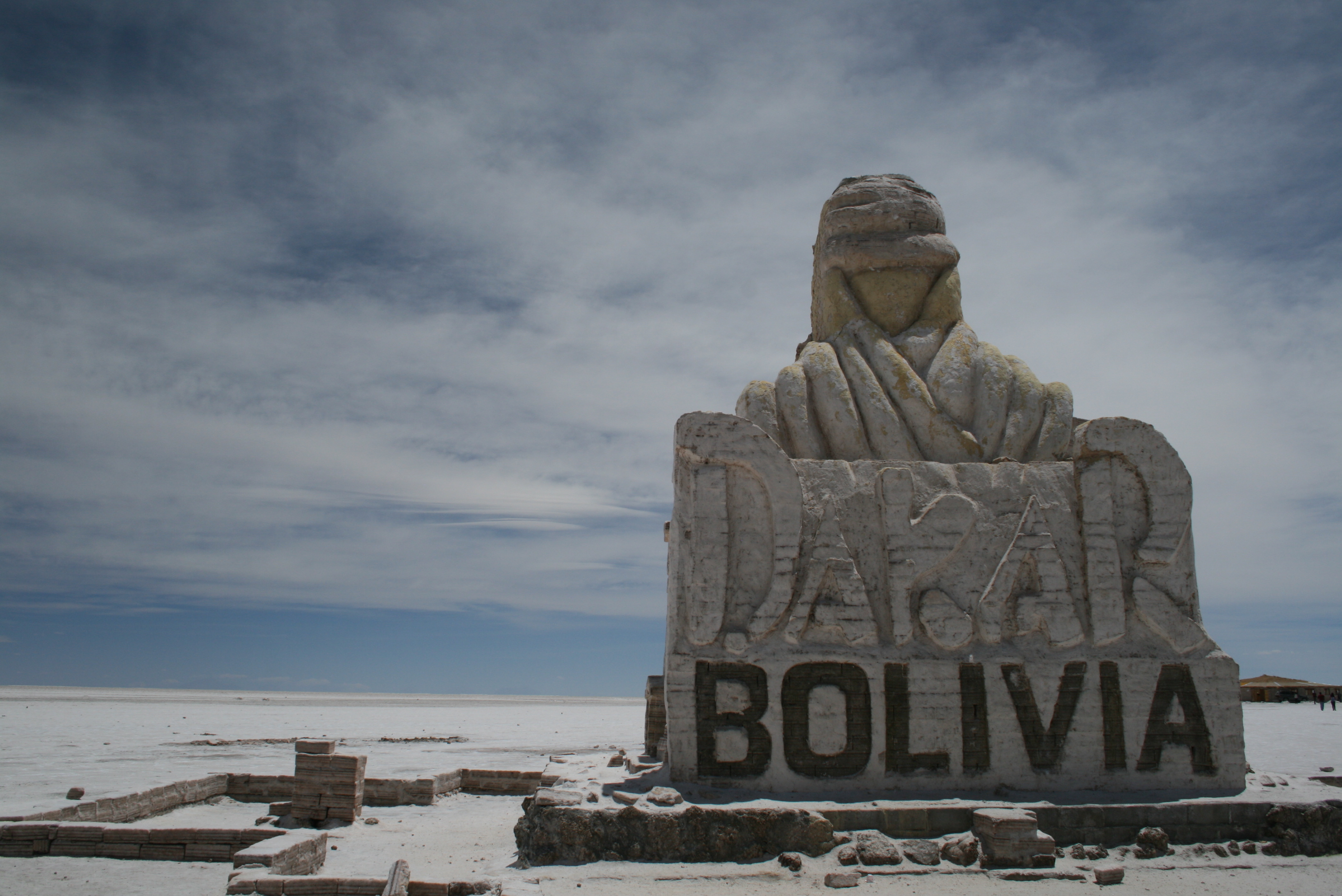
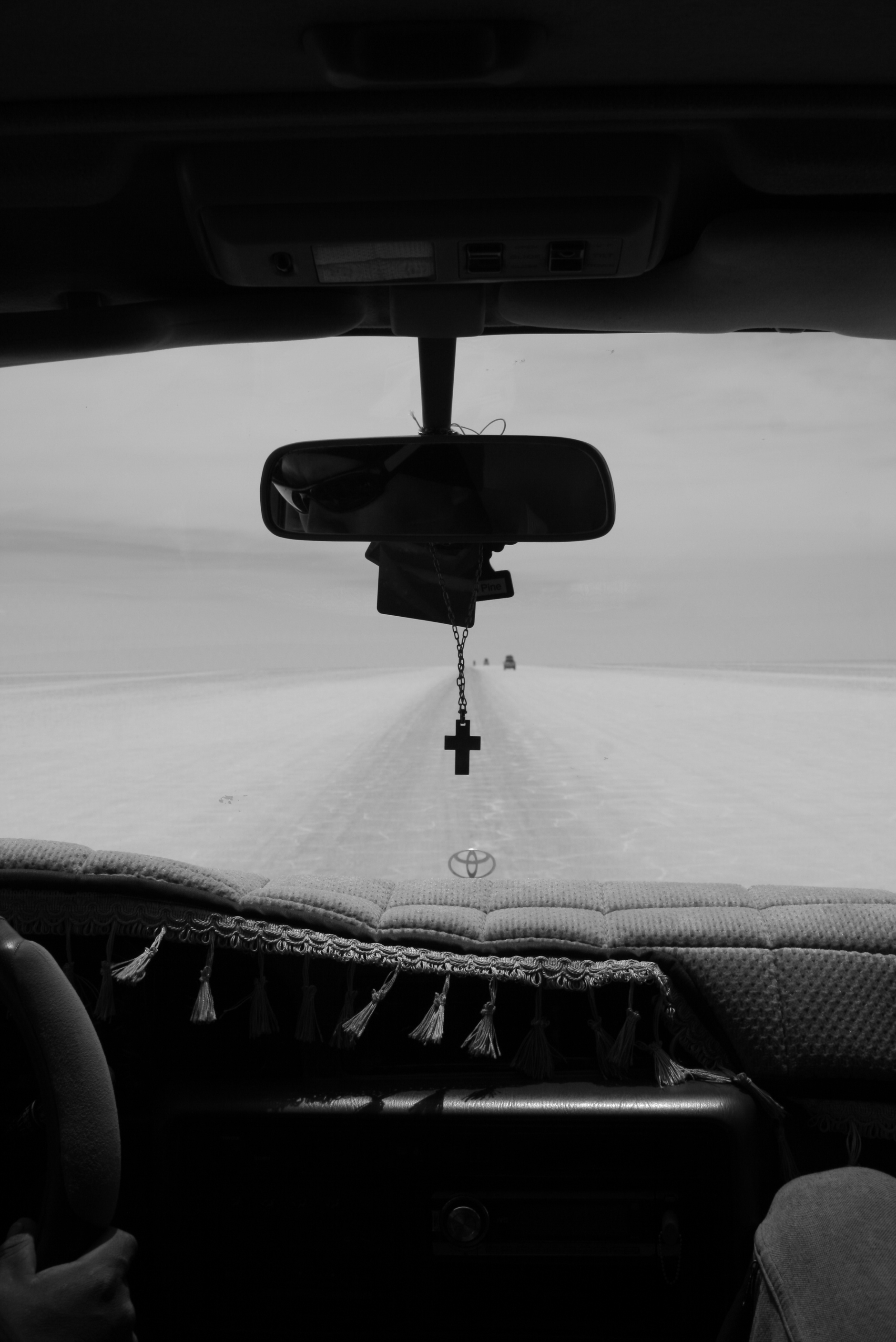
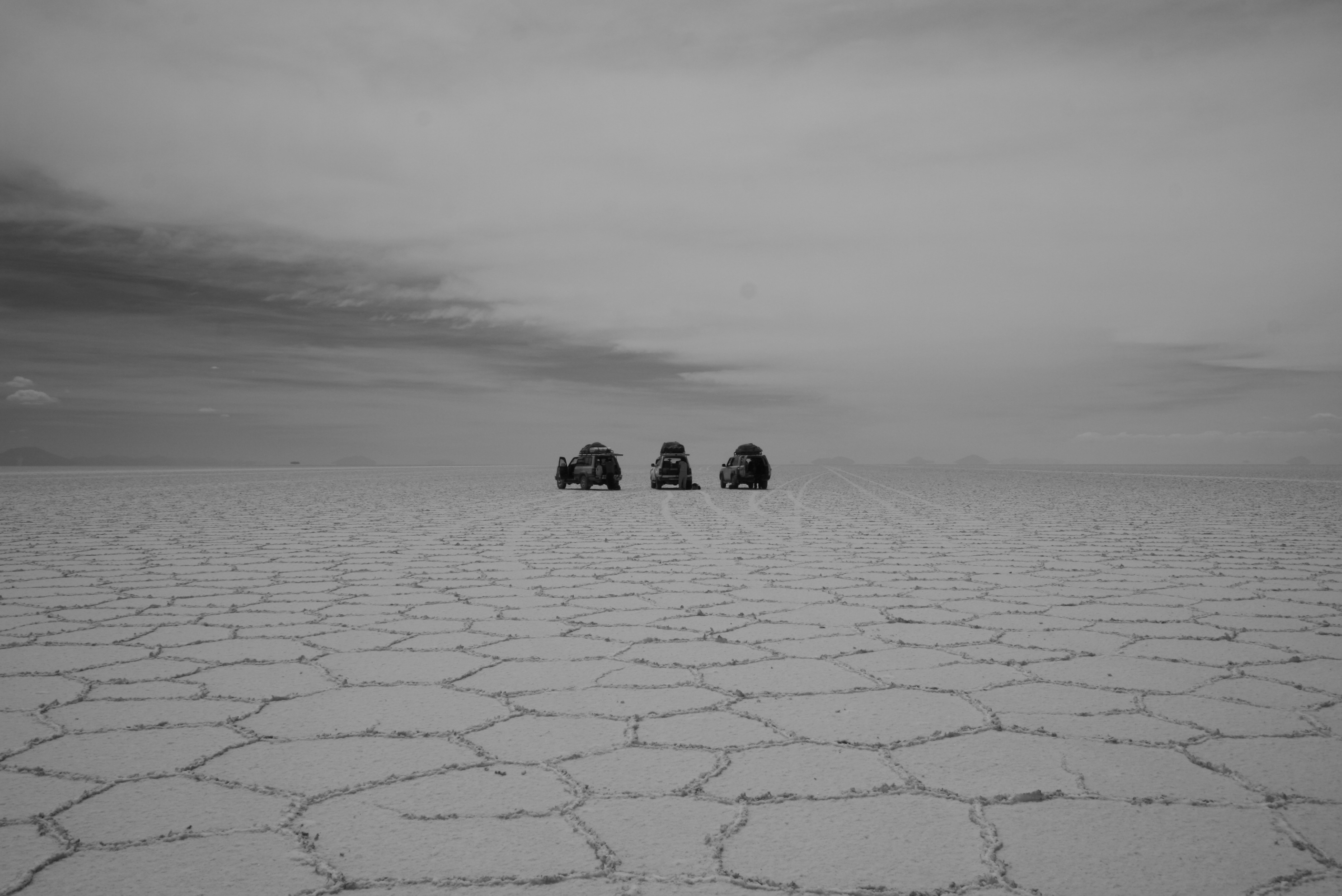


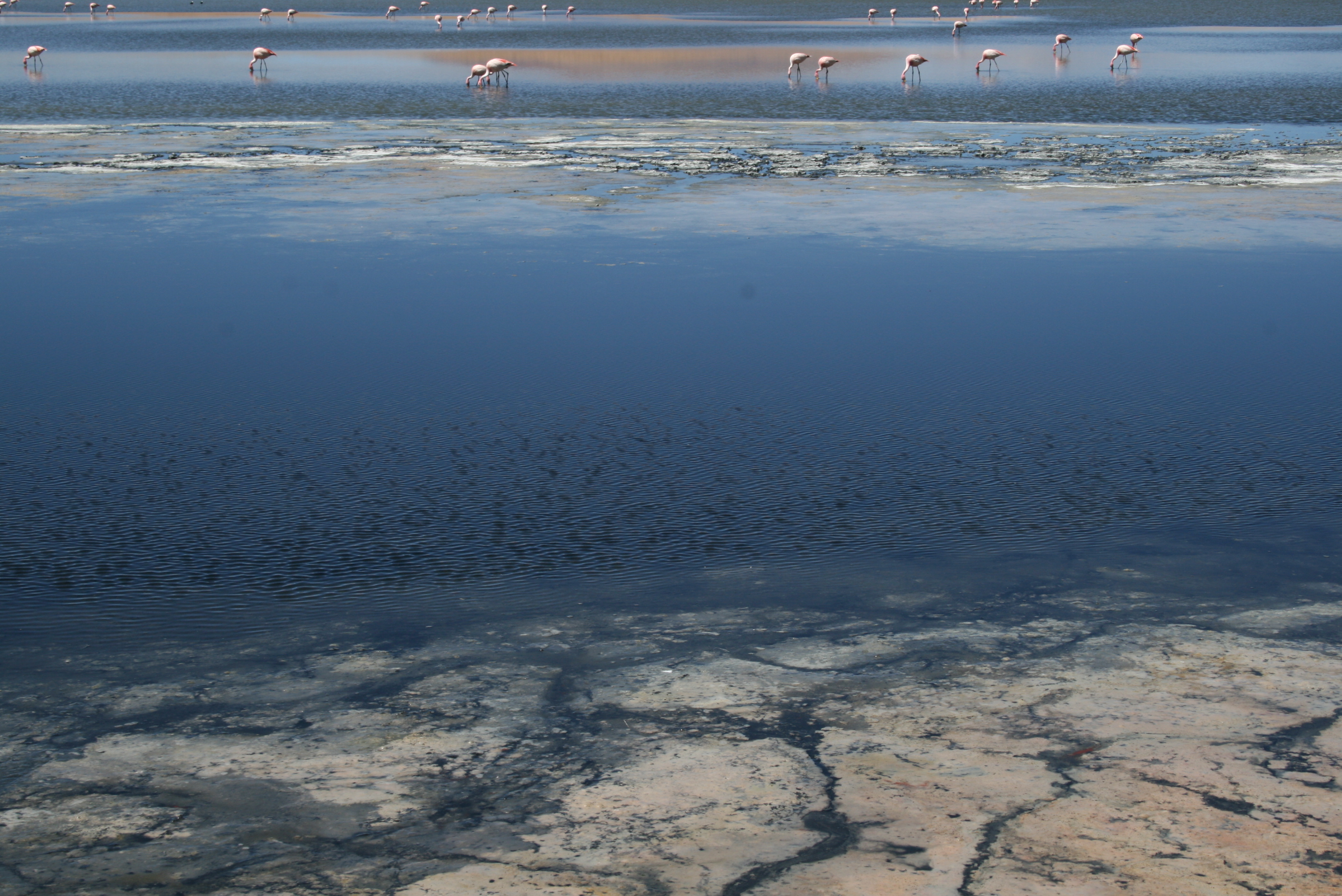


It was a lot of driving, especially the trip back to Uyuni on day 3. Our driver definitely broke whatever speed limits exist on that route. So it became the first time since my parents drove me to Heathrow back in June that I have worn a seatbelt (they are just not standard fixtures on Central- and South American buses). We got delayed 2 hours getting back to Uyuni because instead of waiting for the trucks doing roadworks to move out of the way, our jeep and the one in front of us decided to go off-road. When a river blocked the way, both jeeps turned back and then the one in front of us thought he could make a shortcut across a ‘dried out’ river but it wasn’t quite dry enough for a huge jeep and the right front wheel sunk in and he was stuck. No attempts at digging, adding rocks or using seatbelts (yes seriously, they removed the seatbelts from the jeep and tied them together) to create a cable, for our jeep to pull the other one out, worked. After 1 1/2 hours (during which we stood around feeling not very helpful but also wondering if we’d make it back to Uyuni by nightfall at all), they got the people doing the roadworks to help out. They brought a proper cable and a JCB and on the first attempt, they managed to pull the car out of the swamp. It had been 2 hours at that point but our guide reassured us we’d be back in Uyuni in time for me to catch my 8pm bus. And we were. More speed limits were broken in the process. But we hadn’t driven into a swamp so our jeep still had its seatbelts.

I learned something new about Bolivians when I got on my bus that evening. It turns out the locals of the southern Altiplano expect punctuality and when it was 8.15 and the bus still hadn’t left, they started jeering and yelling to the driver to get a move on. The bus (of the same Bolivian standard of all the other buses I’ve been on since I left La Paz) soon got on its way. I tried to befriend the lady next to me but she just wanted to go to sleep so wrapped herself up in her blankets and ignored my efforts. Unfortunately she wasn’t only poor chat, she also took up half of my seat so I spent the 7 hour journey squeezed up against the window, getting colder and colder and colder as night set in. We got to Tupiza at 3am and I wasn’t about to shell out money on a hostel when the sun would be up in just 2 hours. So I settled in on one of the benches in the tiny provincial bus terminal and read my book. Twice I had to get up and do a quick walk around the terminal building to get the feeling back in my feet because unlike the locals who were sleeping peacefully on their benches, I didn’t have two thick fleece blankets to help keep me warm.
I spent my first day in Tupiza trying to get some of my photos from Bolivia backed up because I was running out of memory-card space on my DSLR. Unfortunately, even though I wasn’t far from the border, I was still in Bolivia and doing anything other than checking emails was a struggle requiring the kind of patience I don’t really have when there are new places to explore.
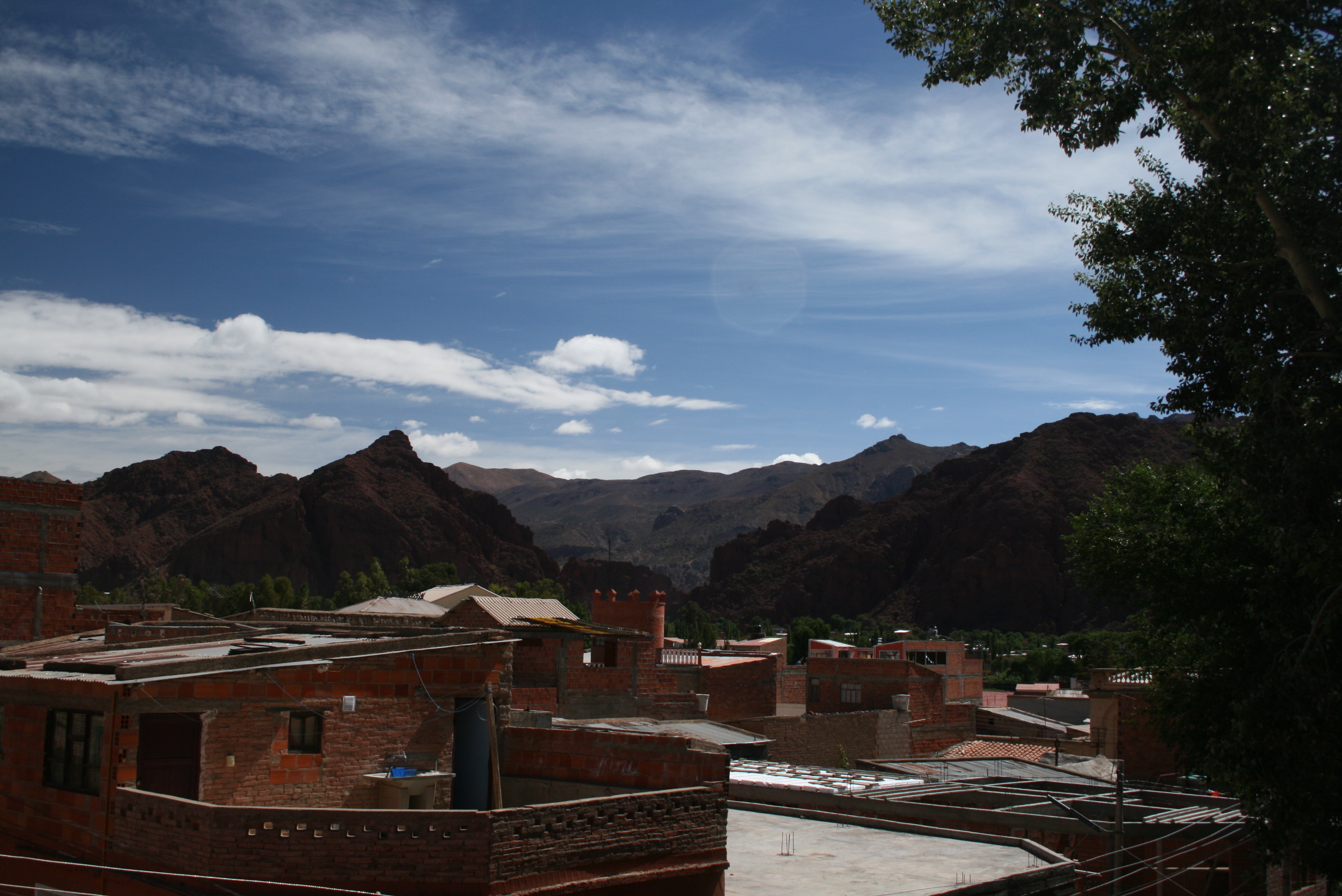
The town of Tupiza is a slightly random little place. You end up mostly walking in the street because so many of the pavements are unfinished. And there is an overwhelming presence of photocopying shops. I couldn’t work out what they do there that might require just that many. There was just one shop selling souvenirs but all their products had ‘Salta’ written on them (wrong country) and it also doubled as a guitar shop so I don’t think they were very dedicated to the tourist trade. The locals were smiley and friendly though, which made it an easy place to feel settled in despite there being very few tourists.
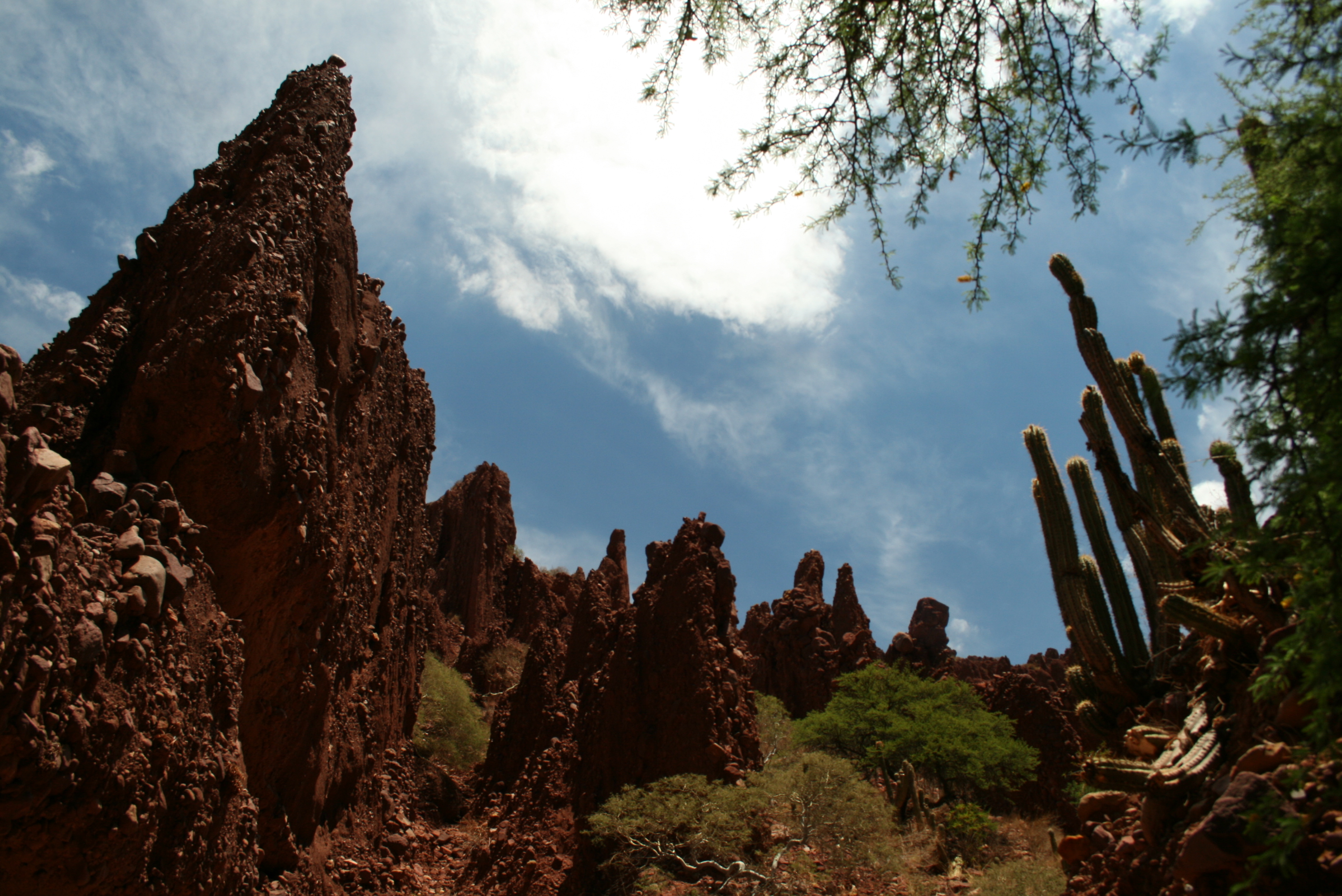
The whole town is surrounded by beautiful scenery which is the big draw of this area so into it I went. On a horse. For 5 whole hours. I haven’t been on, or near, a horse since sometime in my childhood at Legoland and I have few memories of that aside from being very scared. But I obviously felt the need to live out some wild west cowboy fantasy or maybe felt some inexplicable association with Butch Cassidy and the Sundance Kid (not that my horse riding skills enabled me to follow their trail through the area). My guide, Simón, was so lovely though and even gave me a really good deal on two extra hours (I had only booked 3 hours with the agency. Because I wasn’t about to be spending extra money to sit on an unpredictable animal that I was actually pretty scared of). But I survived the trip. And it was with only one injury. At our second stop, Simón had convinced himself that I was capable of getting off the horse without any help. I wasn’t so convinced because it’s a long way down from that thing but I didn’t want to disappoint him so had a go at it. And managed to knock my camera straight into my face, resulting in a fairly deep 1 cm cut by my right eye. It will definitely scar. Lovely, just what I need, another one of those.

The Cañón del Duende was the best part of the trip, just beyond incredible and so worth the extra hours to get there (although possibly not a permanent scar in the middle of my face). The trip did go some way in reducing my fear of horses though, probably because the one I got, Bronco, was very very chilled out (when I said at the agency that I had no experience, the woman did tell me I’d get a horse that was ‘muy tranquilo’. To which I replied that I wanted the horse that was ‘más tranquilo que el caballo muy tranquilo’. Which I think I got. In fact I think I might have gotten one that is a lot like me in Bolivia. He went at his own pace and wasn’t about to get rushed and wandered left and right so was a bit tricky to steer in the right direction. And he stopped to eat all the time. As did I in Tupiza. It was my last chance for salteñas, pique macho and sopa de quinoa so I ate a lot of that, just so I can remember culinary Bolivia when I get to Argentina and start eating steak every day.

After 3 days in Tupiza, it was time to head south (ok, it was mostly because Bolivian immigration had only given me 30 days and I was getting dangerously close to that limit) so I got a minivan to Villazón (which the Lonely Planet says is a 3 hour ride but is actually only 1 1/2 hours). The ticket lady decided to ignore my seat allocation and put me in the front seat with a mom and her 2-year old son so I spent the entire ride trying not to knock him out with my bag, which there was not enough floor space for, as the driver veered from one lane to the other but avoided driving us over the cliff edge (there were a lot of crosses along the side of the road so it was obviously a stretch of road that sees a lot of accidents). In Villazón I changed my remaining Bolivianos (not with dodgy guys at the border because they surprisingly didn’t exist, instead at an actual bureau de cambio where the rate was well above the supposed official one. But that must be because pesos have no value at the moment so it probably wasn’t a good deal. I’m a bit worried that since I’ve planned everything in local currencies, budgeting might be tricky in Argentina with the random exchange rates and massive price inflations) and walked across the bridge to Argentina. There, I cleared both Bolivian emigration and Argentine immigration in 10 minutes before having to queue up for 15min to get my bags scanned by Argentine customs. It was literally a little white minivan that had a conveyor belt running through it but no one was watching the screen in the little office so clearly security really matters at Argentina’s border control.

The first sign you see in Argentina once through the customs area is for taxis. The second is a little (ok, the sign is actually fairly big) reminder of their view on the ownership of Las Malvinas. I didn’t get a photo of it but I had just written on my immigration form that my country of residence is the UK so I probably would have attracted some unpleasant looks if I’d done that.
It was only about a 20 min. walk from the border to the bus station in La Quiaca where I learned that either buses are really expensive in Argentina or they really try to rip you off. Or there’s the whole currency devaluation thing but that’s just complicating things way too much. So I tried my luck at bargaining the price down and got a slight discount. I also learned that you lose an hour when you go from Bolivia to Argentina. I thought I had another hour till my 1pm bus was due to leave but the guy at the ticket office thankfully pointed to his watch which didn’t have the same time as mine. Him being the local, I trusted his more than mine. The bus left at 1.30 and I had an ace seat at the very front on the top deck so got to take in the beautiful scenery of northern Argentina the entire 3 hours it took to get to Tilcara. So I’m now safely in Argentina, looking forward to warmer weather but starting to realise I don’t have long left on this awesome continent.
Bolivia was wicked. I can’t believe how fast that month went. And there is so much I didn’t do and didn’t see! The variety of just about everything from one region to another is what struck me most – the nature, the people, the traditions, the colours. But the colours were always there and the local traditions were always present on your path. And I loved that. I wish my Spanish had been slightly better because I think there would have been so much more to learn just speaking to local people if I had been a bit better able to have a consistent conversation. But I took a lot away from Bolivia on a personal level, even though some things have now just become habit. This is the first place where I’ve felt like travelling is just a way of life now, where a lot of the little things no longer have the same impact they did just a few months ago. But I’m happy that didn’t work against Bolivia. So thank you, lovely Bolivia, for the experiences that I’ll probably never match (a 6000m glacier?!? What the hell was I thinking?), for your unfathomable natural beauty and for not bragging about that even though you could, for the locals who are friendly and don’t dismiss you even though you don’t share a common language and who love their country but aren’t afraid to have opinions about it and share them. And for letting me have incredible luck with your buses, none of which had major breakdowns and all of which stayed on the road while driving (although not always on the correct side of the road). And for letting me eat street food without getting food poisoning. You have been awesome and I hope I was as great of a visitor as you were a host. I somehow suspect our paths will cross again at some point.
Today I’m listening to: Laura Marling – ‘Captain And The Hourglass’
 whatgunilladidnext
Gunilla vil elsker dine fotos og den med hesten. Kærlig hilsen Mormor og Morfor